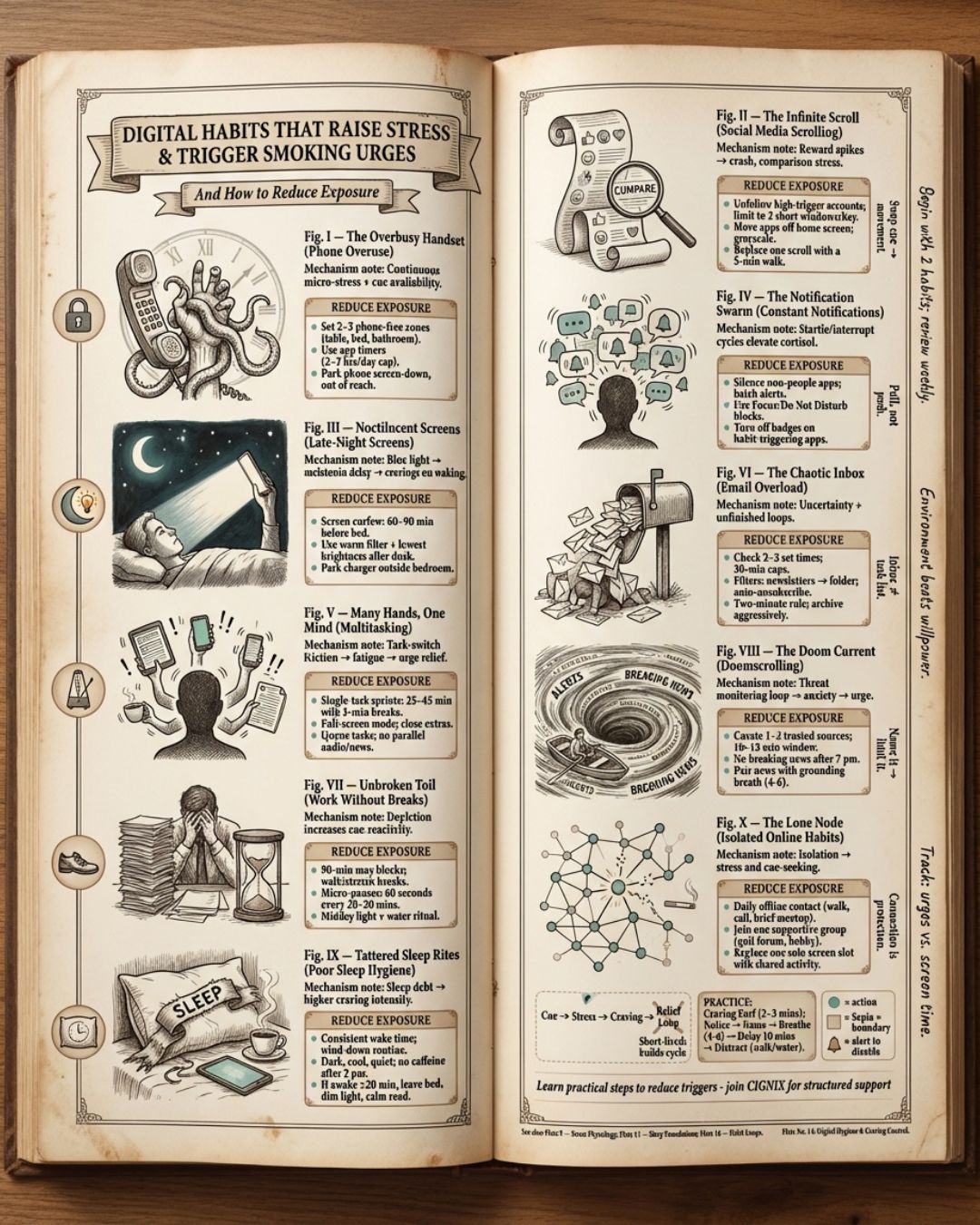
How Digital Habits Increase Stress
Digital habits that increase stress often build up slowly. Constant notifications, long screen time, and nonstop information keep the brain in a state of alert. Instead of resting between tasks, the mind is always reacting
Over time, this can lead to mental fatigue, irritability, trouble sleeping, and feeling “on edge.” When stress feels constant, the brain looks for fast relief. For many smokers, nicotine has filled that role, even though the relief is short-lived.
Why Stress Triggers Smoking Urges
Nicotine briefly changes brain chemistry, creating a sense of calm or focus. When stress rises, the brain remembers this effect and signals a craving. Digital habits that increase stress can make this worse by increasing stress hormones like cortisol and reducing opportunities for real rest.
The result is a cycle: stressful digital habits increase tension, tension can make it hard to quit smoking addiction and nicotine withdrawal between cigarettes adds even more stress.
Common Digital Habits That Raise Stress
Constant notifications and alerts: Frequent interruptions keep the nervous system activated. Each alert pulls attention away and increases mental strain.
Scrolling without breaks: Endless social media or news scrolling can increase anxiety, comparison, and negative thinking.
Late-night screen use: Using screens before bed interferes with sleep quality. Poor sleep lowers stress tolerance and increases cravings the next day.
Multitasking on multiple devices: Switching between apps, emails, and messages reduces focus and increases frustration
Practical, Realistic Tips for Digital Habits that Increase Stress
- Silence non-essential notifications, especially during meals and rest time
- Set short screen breaks every 60–90 minutes
- Avoid news or social media right before bed
- Use “do not disturb” settings during focused work
- Replace one scrolling break with a brief walk or deep breathing
These steps don’t require perfection and they will also help in better stress management. Even partial changes can make a difference.
Addressing Common Challenges
Many people worry that reducing screen time or deciding to quit smoking will make them feel disconnected or less productive. In reality, most people report feeling calmer and more focused after setting limits. If smoking has been a go-to stress response, cravings may still appear. That’s normal. Pairing digital changes with other coping skills, like movement, hydration, or mindful breathing, can help bridge the gap.
A Supportive Path Forward
If you’re working to quit smoking, noticing digital habits that increase stress is not about blame. It’s about understanding how modern life affects your body and mind. Small, consistent adjustments can lower daily stress and reduce smoking urges over time.
Change doesn’t have to happen all at once. With patience and support, healthier digital habits can become part of a balanced approach to stress management and lasting freedom from smoking.