Pay Attention to These Habits
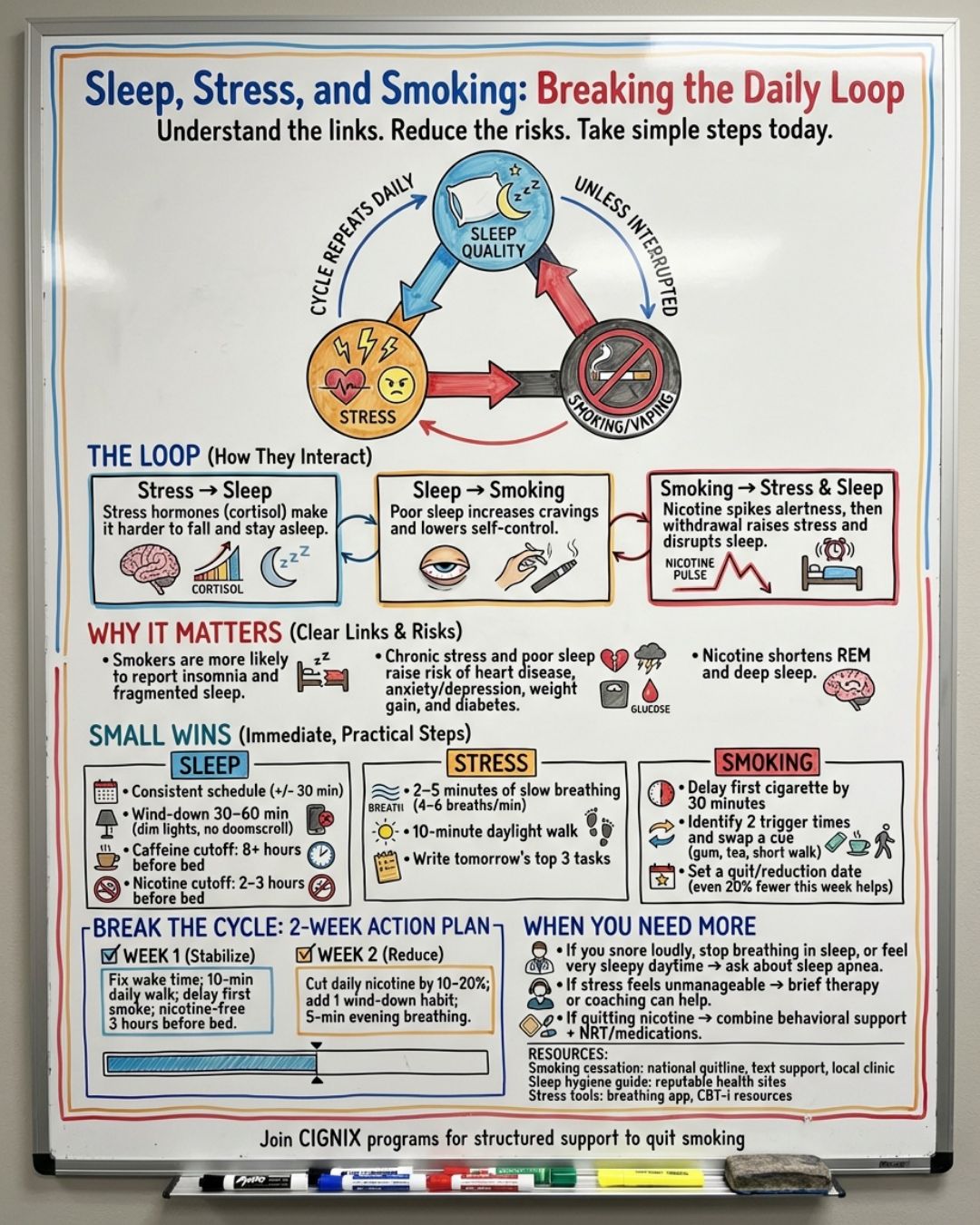
Poor sleep, high stress, and smoking are each linked to health problems on their own. Together, they can reinforce one another and create a cycle that’s hard to break. Learning the effects of smoking on sleep is an important step toward feeling better day to day.
Stress, Smoking and Sleep: The Interconnected Trio
Stress activates the body’s “fight or flight” response. When stress stays high, it becomes harder to relax at night and fall asleep. People develop smoking habits as nicotine can feel calming in the moment.
In reality, nicotine is a stimulant. The effects of smoking on sleep include lighter sleep, more nighttime awakenings, and shorter total sleep time. Smokers are also more likely to wake up early due to nicotine withdrawal, which can further disrupt rest.
Poor sleep then increases stress the next day. When people feel tired and overwhelmed, the urge to smoke can feel stronger. Over time, this cycle can repeat daily.
Why Your Body Needs A Reset
When smoking decreases or stops, the body begins to adjust. Nicotine levels stabilise, allowing the nervous system to calm more naturally at night. Research shows that when you quit smoking, sleep and stress improve: better sleep supports emotional regulation, and lower stress makes it easier to maintain healthy habits.
Quality sleep also helps the brain manage cravings and improves mood, focus, and energy. These changes don’t happen overnight, but they build gradually.
Useful Tips to Consider
Small, realistic changes can make a difference:
- Keep a consistent sleep schedule, even on weekends
- Create a calming pre-sleep routine, such as reading or gentle stretching
- Limit caffeine after early afternoon
- Practice stress-reduction techniques like deep breathing or short walks
If you’re planning to quit smoking, pairing that goal with good sleep habits can make the process feel more manageable.
Challenges To Watch Out
It’s normal to experience short-term sleep disruption when you quit smoking. Some people notice restlessness or vivid dreams for a few weeks. Stress may also feel more noticeable at first without nicotine.
These challenges are temporary. Support from healthcare providers, counseling, or smoking addiction free programs can help address both sleep and stress during this adjustment period.
A Supportive Path Forward
Sleep, stress, and smoking are deeply connected, especially in modern lifestyles. Improving one area often helps the others. Whether you’re working on better sleep, managing stress, or planning to quit smoking, progress matters more than perfection.
With patience and the right support, your body can relearn how to rest, recover, and cope in healthier ways. Small steps taken today can lead to better sleep, lower stress, and improved well-being over time.