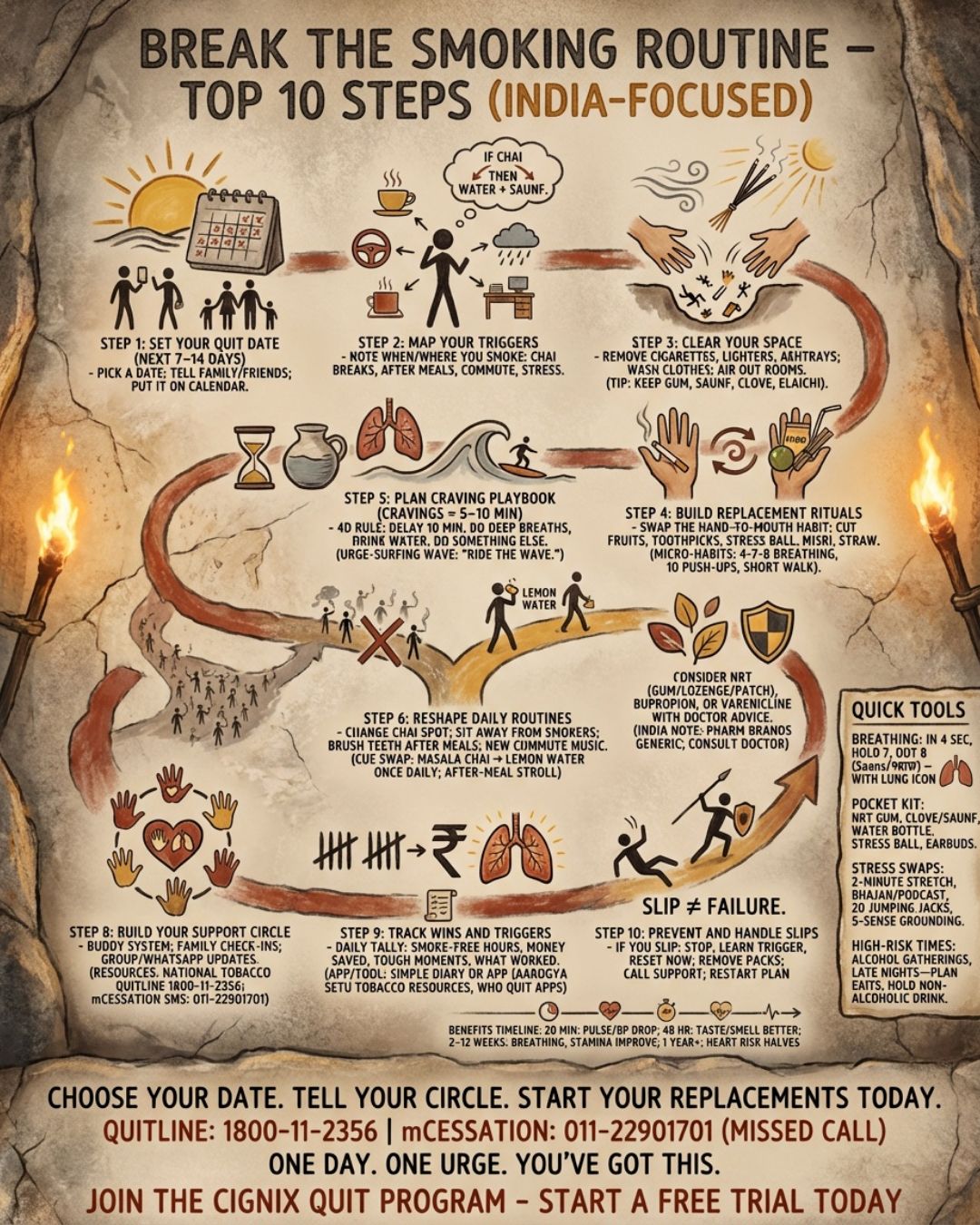
What is a smoking routine?
Smoking addiction is not just about nicotine. Over time, the brain links cigarettes to daily moments like morning coffee, work breaks, driving, stress, or social time. These repeated pairings create a strong routine. When the routines are disrupted, cravings can show up even when nicotine levels are low.
That’s why learning how to quit smoking means addressing both the physical dependence and the habits wrapped around it.
Why you need to act now to quit smoking routine
Research shows that people do better when they follow clear, practical steps instead of relying on willpower alone. Replacing routines, planning for triggers, and using support all help retrain the brain. These approaches are among the best steps to quit smoking permanently because they target the reasons people smoke not just the cigarette itself.
Make a firm decision on quitting smoking
Your reason doesn’t have to be dramatic. Better breathing, saving money, protecting family, or feeling more in control all count. Write your reason down and revisit it often, especially during cravings.
Be realistic when it comes to setting quitting goals
Choose a date within the next two to four weeks. This gives you time to prepare without losing momentum. Avoid waiting for a “perfect” moment, there isn’t one.
Know your smoking triggers
Pay attention to when and where you smoke. Common triggers include stress, boredom, alcohol, and specific routines. Knowing your triggers helps you plan alternatives instead of reacting automatically.
Modify your daily routines to accommodate smoking free lifestyle
Small changes can weaken smoking cues. Try a different morning drink, take a new route to work, or switch up break times. These shifts help break the link between habits and cigarettes.
Utilise proven methods to understand how to quit smoking
Nicotine patches, gum, lozenges, and prescription medications can reduce withdrawal symptoms. These tools are safe and effective for many people and can double the chances of success when used correctly.
Learn how to manage cravings
Cravings usually peak for a few minutes, then fade. Try the “delay, distract, deep breathe” approach. Even a short walk or a glass of water can help the urge pass.
Learn about efficient, distraction-free stress management
Stress is a common reason people relapse. Build a short list of stress-relief options, such as stretching, breathing exercises, music, or calling a supportive person.
Moderate yourself in social settings
Alcohol lowers inhibition and can trigger smoking. Consider limiting alcohol early on or choosing smoke-free environments while you build confidence.
Seek support as and when needed
Support can come from healthcare providers, quitlines, apps, support groups, or trusted friends. Asking for help is one of the most effective ways to quit smoking.
Maintain the motivation to continue
A slip does not erase progress. Many former smokers had setbacks before quitting permanently. Instead of self-blame, ask what led to the slip and adjust your plan.
Consider the challenges you might face and how to tackle them
- You can experience withdrawal symptoms like irritability, trouble sleeping, or increased appetite. They are temporary and usually improve within a few weeks.
- Focus on healthy snacks and movement rather than strict dieting early on.
- Finding out the best ways to quit smoking comes with practice. Each attempt teaches you something useful.
The best moment to quit smoking is now!
Quitting smoking is a process, not a single decision. If you’re exploring ways to quit smoking, know that progress counts, even when it’s gradual. With patience, planning, and emotional support, it is possible to break the routine and build a healthier future. If you need guidance, a healthcare professional can help you choose an approach that fits your life and your goals. So, don’t wait for that perfect moment to magically appear in front of you, make it happen one ‘no’ at a time.